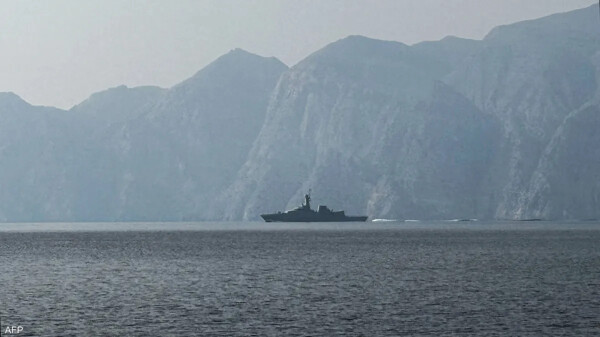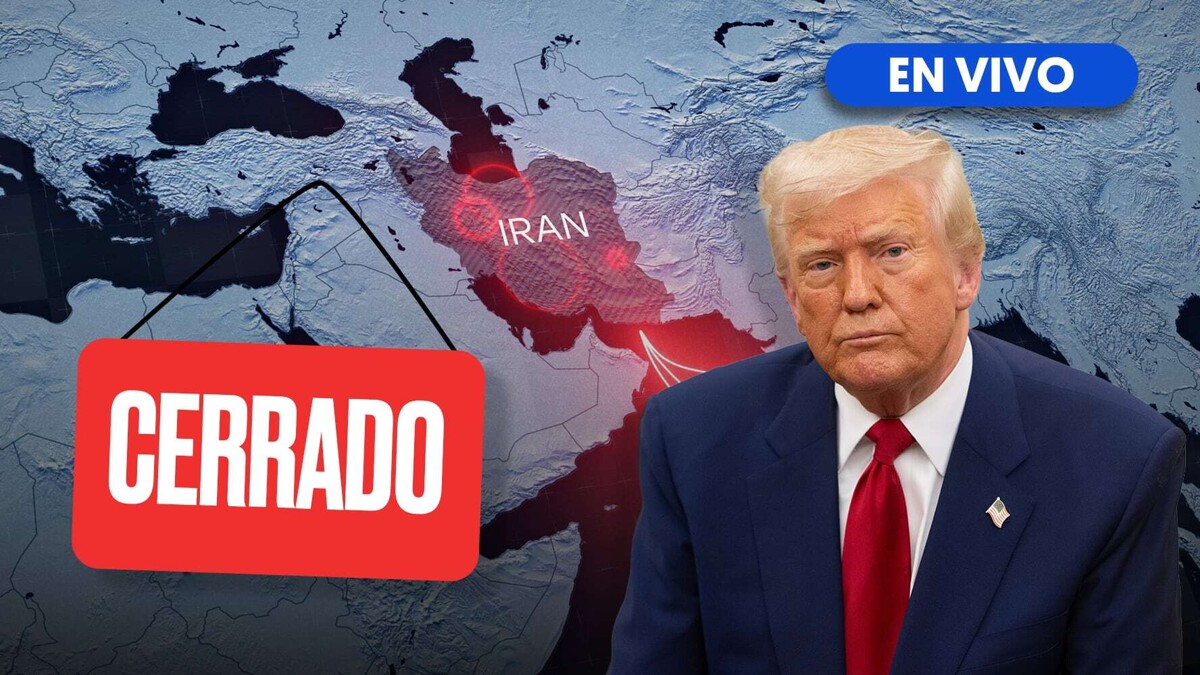
Donald Trump has ordered the closure of the Strait of Hormuz to begin this Monday, April 13, marking another step in his offensive against Iran following the failure of peace negotiations in Pakistan this weekend. According to Trump, the closure of the Strait of Hormuz, controlled by Iran, aims to cut the economic benefits obtained by the country's Revolutionary Guard. Reports indicate they charge up to 2 million dollars for allowing passage. The US destroyer blockade in the Strait of Hormuz will begin at 8:00 AM on April 13. Financial news outlets bring the latest news on the blockade. US Blockade of the Strait of Hormuz: Latest News 8:24 AM: Trump warned the Iranian Navy not to use its 'fast attack' vessels to break the blockade in the Strait of Hormuz. 'If any of these ships approaches our BLOCKADE, it will be ELIMINATED immediately, using the same elimination system we use against drug traffickers at sea,' he wrote on Truth Social. Which ships will be affected by the US blockade in the Strait of Hormuz? US Central Command (Centcom) explained that the closure of the Strait of Hormuz will apply 'evenly', meaning to vessels of all nations, including those allied with the Americans. The US will block all Iranian ports in the Persian Gulf and Oman. 'We are imposing a total blockade,' he said over the weekend in an interview with Fox's Sunday Morning Futures. On his social media, Trump pointed out that 'at some point, a situation will arise where EVERYONE CAN ENTER and EVERYONE CAN EXIT, but Iran has not allowed that to happen by limiting itself to saying: 'There could be a mine out there somewhere,' that no one knows except them.' For Trump, this is 'WORLDWIDE EXTORTION'. Iran has exported millions of barrels of oil since the war with the US and Israel began, much of it likely through clandestine transits that evade sanctions and Western government oversight. What is a naval blockade like the one the US will conduct in the Strait of Hormuz? According to the US Navy's Commander's Handbook on the Law of Naval Operations, 'a blockade is a belligerent operation designed to prevent ships and/or aircraft from entering or leaving ports, airfields, or specific coastal areas belonging to an enemy state, occupied by it, or under its control.' 'The right of blockade seeks to completely prevent the passage of ships and aircraft, regardless of their cargo, through a previously established and announced cordon that separates the enemy from international waters or airspace,' it details. The same manual stipulates that 'a blockade must be applied impartially': 'Discrimination by the imposing power, for or against ships and aircraft of certain States, including its own or those of an ally, invalidates it legally.' The announcement of the blockade halted the limited ship traffic that had resumed in the Strait of Hormuz since the ceasefire agreed with Iran, according to an early intelligence report from Lloyd's List. Centcom forces will not obstruct the freedom of navigation for ships 'transiting the Strait of Hormuz to and from non-Iranian ports'. Donald Trump emphasized that no country will be able to bypass this veto. 'We are not going to allow Iran to make money by selling oil to the countries it likes and not to the ones it doesn't... It will be all or nothing. Maritime trackers indicated that more than 40 commercial vessels had crossed the strait, down from the approximately 100 to 135 vessel passages per day before the war. Is the US blockade of the Strait of Hormuz illegal? The San Remo Manual, an initiative that compiles the international law applicable to armed conflicts at sea, stipulates that: A blockade must be declared and notified to all belligerents and neutral States. It must not impede access to the ports and coasts of neutral countries. It cannot impede, among other things, the passage of medical supplies for the civilian population and wounded or sick military personnel. It also warns that merchant vessels may be captured when there are reasonable grounds to believe they violate the blockade, and those that, after prior intimidation, 'offer manifest resistance to capture may be attacked'. With information from AP, Bloomberg, and EFE.