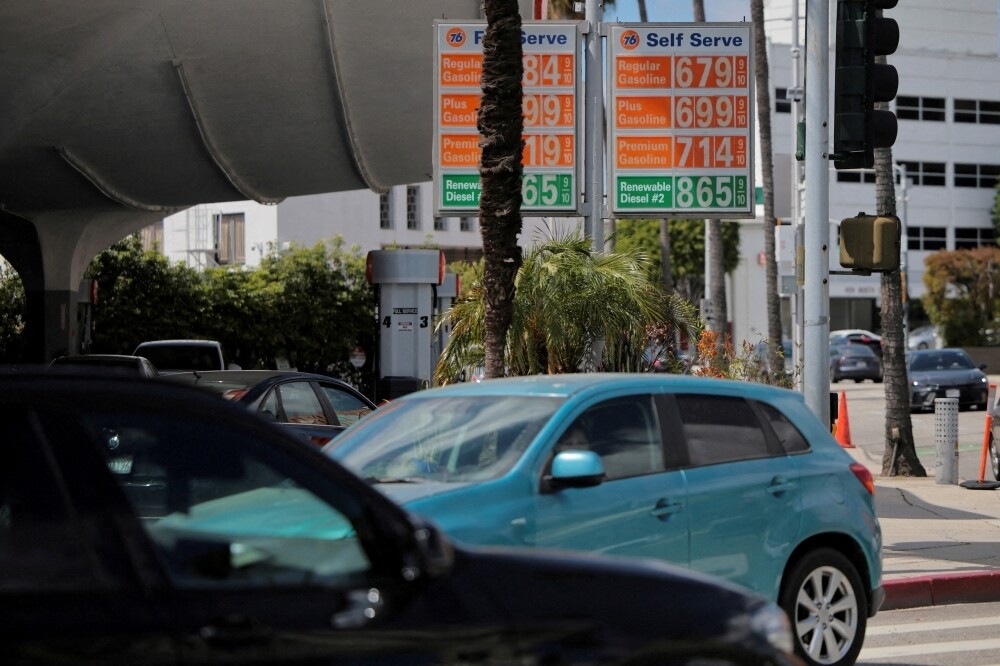
The impact of tariffs continues to be passed on to consumers in the form of a 1% increase in clothing prices. The Consumer Price Index (CPI) rose to 2.6% over the 12 months ending in March, up from 2.5% in February. The Federal Reserve kept its main interest rate within a range of 3.50% to 3.75%. A 0.4% drop in prices for used cars and trucks helped to slow the core inflation rate, along with a 1.5% decrease in prices for prescription drugs, which some economists consider a one-time event. The report also showed continued decline in the cost of health insurance, which fell by 1.4%. Current conditions and expectations indexes showed significant monthly declines. This drop in consumer confidence coincided with a sharp rise in inflation expectations, with respondents expecting prices to rise by 4.8% over the next year, a full percentage point higher than March's reading and reaching a high not seen since August 2025. Consumer confidence fell to a record low in April amid growing concerns over rising energy prices and the general impact of the Iranian conflict. The main consumer confidence index fell to 47.6 points, down 10.7% from March's survey and hitting an all-time low. Thus, the survey primarily reflects the conditions prevailing in March. The survey director stated, "It is likely that economic expectations will improve after consumers regain confidence as supply chain disruptions caused by the Iranian conflict ease and gas prices fall." The survey was released shortly after the Bureau of Labor Statistics reported a 0.9% increase in the all-items Consumer Price Index in March, pushing the annual inflation rate to 3.3%. The cost of health insurance decreased by 5.3% on an annual basis. Airline fares rose by 2.7%, which some economists saw as an early sign that the oil shock was translating into service sector inflation. The report also noted that most of the overall increase was due to rising energy prices, while there was no significant change in food price inflation. Five-year inflation expectations in the University of Michigan survey rose to 3.4%, a monthly increase of 0.2 percentage points, though still a percentage point lower than last year's level. The U.S. Consumer Price Index rose to its highest level in nearly four years in March with an unprecedented surge in the cost of gasoline and diesel, dealing a heavy blow to President Donald Trump, whose popularity has waned due to discontent over his handling of the economy. Although consumer price data from the U.S. Department of Labor on Friday showed a slight monthly increase in the index that measures inflation excluding volatile food and energy components, economists pointed out that March's data only reflected the direct effects of the oil shock, with secondary effects expected in the coming months. Therefore, the index data will not reassure Federal Reserve officials and will not change expert expectations that it is unlikely the Fed will cut interest rates this year. The Consumer Price Index rose 3.3% over the 12 months ending in March, up from 2.4% in February. In an effort to divert attention from rising gasoline prices, the White House on Friday tried to redirect focus by posting on social media that "prices for eggs, red meat, prescription drugs, dairy products, and other household goods are falling or stabilizing thanks to President Trump's policies." Food prices stabilized after rising 0.4% in February. The question remains whether disgruntled consumers will ultimately resort to a boycott. The U.S. Department of Labor's Bureau of Labor Statistics reported on Friday that the Consumer Price Index jumped 0.9% last month, marking the largest increase since June 2022 when prices rose due to the Russian-Ukrainian war. Prices for fruits and vegetables rose 1.0%, up 4.0% over the 12 months ending in March. Excluding volatile food and energy, the core Consumer Price Index rose 0.2%, in line with February's rate. Prices for other fuels, including diesel, surged 30.8%, the largest increase since the government began tracking this data. The U.S.-Israeli war against Iran led to a more than 30% increase in global crude oil prices. The average U.S. retail gasoline price exceeded $4 a gallon for the first time in more than three years. Despite President Trump's Tuesday announcement of a two-week ceasefire conditional on Tehran reopening the Strait of Hormuz, the truce appears fragile and collapsible. The monthly increase aligned with economists' expectations. The 21.2% increase in gasoline prices accounted for nearly three-quarters of the monthly rise in the index. This data came after a sharp rebound in job growth last month, indicating a stable labor market. Christopher Rubi, chief economist at FWD Bonds, said, "The economy took a direct hit from inflation due to the war in the Middle East... economists say that once inflation gets out of control, it becomes nearly impossible to curb price increases or bring costs back to previous levels. Grocery prices fell 0.2%, influenced by a 3.4% drop in egg prices. Meat prices fell despite a 12.1% annual increase in beef prices. Some economists still anticipate a possible interest rate cut. The index rose 0.3% in February. Rent increases were moderate. Inflation expectations for one year in April 2025 reached 6.5%, following President Donald Trump's announcement of imposing tariffs under the name "Liberation Day." The survey director, Joan Hsu, stated that respondents' comments "show that many consumers blame the conflict with Iran for the negative economic changes." However, Hsu also noted that most interviews were conducted before the ceasefire on April 7.