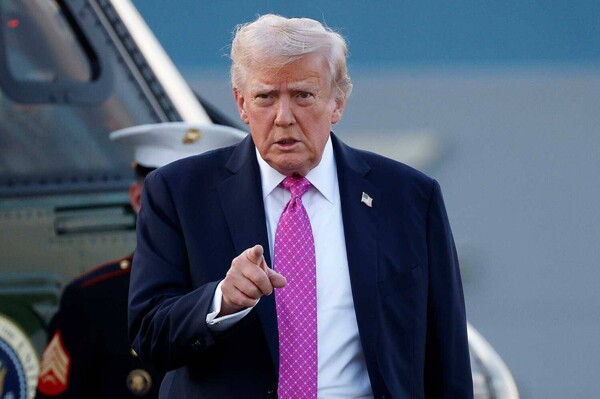
Subordinating the reconstruction of a devastated region to payment capacity and loyalty to a presidency with lifelong powers places the world before an existential dilemma. If the international order is left in the hands of what Trump calls 'the most prestigious board ever formed,' the resulting peace will not be the fruit of justice or dialogue, but a byproduct of a high-risk commercial transaction. Members of the Peace Council led by Donald Trump. According to José de la Rosa Castillo, a university professor, the recent formalization of the Peace Council at the Davos Forum under the aegis of Donald Trump marks the beginning of an era in which international diplomacy appears to have abandoned multilateral negotiation tables for a 'pay-to-play' structure. According to the Council's statutes, access to a permanent seat does not depend on sovereign representativeness, but on a contribution of $1 billion to a fund controlled directly by the presidency of the body. This 'subscription diplomacy' not only excludes developing nations—ironically, the most affected by conflicts—but redefines peace mediation as a luxury product. To date, the Council already boasts pledges of $5 billion for the '20-point plan' in Gaza; however, that capital will not be managed by transparent agencies, but by a committee of technocrats under extreme political and military conditions. A Dangerous Precedent. Ultimately, the Peace Council represents a paradigm shift in which diplomacy ceases to be an exercise in consensus to become a privately-owned structure. By inviting nations individually, Trump has launched a direct challenge to the bloc's cohesion, forcing its leaders to choose between immediate geopolitical relevance or loyalty to their founding principles. While figures like Hungary's Viktor Orbán have embraced the initiative, other leaders—such as Spain's Pedro Sánchez or Slovenia's Robert Golob—warn that this Council operates dangerously outside the framework of the United Nations. For Brussels (EU), accepting this leadership implies validating a structure that ignores traditional international law and dilutes Europe's historic 'soft power' in favor of governance centralized in Washington. The 'Transactional Peace': The Billion-Dollar Model. The most disruptive aspect of this new order is its distinctly financial nature. A peace that, while agile, lacks the legitimacy to survive beyond the man who created it. Although the initiative is presented as the definitive solution for chronic conflicts like the one in Gaza, an analysis of its architecture reveals a design geared more towards the exercise of transactional power than towards lasting global stability. The Dilemma of European Autonomy. The creation of this body has caused a deep fracture within the European Union.

Trump's Peace Council: Diplomacy as a Commodity
The creation of the Peace Council under Donald Trump's leadership marks a new era where international diplomacy is transforming into a 'pay-to-play' structure, with access determined by a $1 billion financial contribution rather than sovereignty or representation. Critics argue this approach sets a dangerous precedent, turning peacemaking into a luxury product and undermining the foundations of traditional diplomacy and international law.