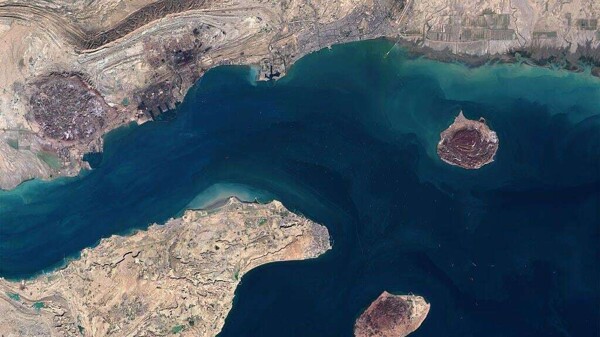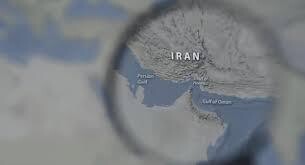
In the last two weeks, the US administration has once again presented the Iranian regime as responsible for the deaths of American citizens and soldiers over decades through its own forces and allied groups. The regime's response was immediate: its military command threatened retaliations against energy, technological, and service infrastructure linked to the United States and its allies in the Persian Gulf if its own facilities are attacked. This episode once again shows the nature of a power that not only uses missiles and blockades but also energy extortion as a political and military tool. The underlying point is that Tehran is not acting as a cornered defensive actor, but as a regime that for decades has been pointed out by Washington as a state sponsor of terrorism. That is, the ayatollahs' regime not only threatens its neighbors with missiles: it also takes the global energy market hostage, punishes entire economies, and raises the cost of living for millions of people to sustain its political and military pulse. The seriousness of the picture is multiplied because the Iranian warning comes after weeks in which the regime expanded the conflict with attacks on Israel, attempts to hit the Diego Garcia base, and increasingly open threats to countries that allow the use of their facilities by Washington. Faced with Trump's ultimatum, the regime responded not with an opening, but with another threat about energy. That is why the discussion is no longer just about the war between Israel and Iran, but about the right of the Iranian regime to continue using its missile power, its proxies, and its geographical position to extort the international system. What makes this moment even more unsettling is that the Islamic republic seems to combine two methods of pressure at the same time: the indirect terrorism that its adversaries have attributed to it for decades and the open interstate coercion through missiles, drones, and energy blockade. That behavior fits the pattern that its critics have attributed to it for years: not to dispute only in the direct military field, but through regional intimidation, allied networks, and aggression against civilian or strategic infrastructure. In political terms, Trump's ultimatum seeks to cut exactly that logic of blackmail. In that framework, the current threat to Hormuz does not appear as an anomaly, but as the continuation of a logic of coercion, sabotage, and indirect violence exercised for almost half a century. The strategic value of the strait explains why the threat has an immediate global impact. If for years it exported instability through third parties, today it adds the direct threat to maritime routes, bases, and strategic assets. Washington, March 22, 2026 - Total News Agency - TNA. The war in the Middle East has entered a new phase of maximum danger after President Donald Trump gave Iran a 48-hour ultimatum to fully reopen the Strait of Hormuz and warned that if it does not, the United States will attack and destroy Iranian power plants. The White House understands that leaving Hormuz in Tehran's hands would be equivalent to accepting that a regime, pointed out for decades for financing and arming violent organizations, can decide when one of the vital arteries of the global economy opens or closes. This evolution explains why the conviction is growing in the West that the problem is not just nuclear or regional, but that of a regime that has made prolonged violence a constitutive part of its foreign policy. In the end, this Sunday's warning leaves a clear image. Iran, questioned for decades for supporting regional terrorism, once again places itself on the side of the threat and not of stability. The Department of State keeps Iran on the official list of state sponsors of terrorism, and both the White House and American diplomacy describe it as the main state sponsor of armed networks and proxy militias in the region. In other words, Iran is trying to establish that any nation that cooperates with the Western coalition can become a target. The partial blockade imposed by Iran, even while formally claiming to allow the passage of 'non-enemy' ships, has already paralyzed most traffic and pushed energy prices to high-tension levels. And in doing so, it confirmed once again why a growing part of the world sees it not as an actor willing to coexist with rules, but as a machine that only understands the language of pressure, intimidation, and force. Around 20% of the world's oil trade and a central portion of the liquefied natural gas that supplies Europe and much of Asia pass through Hormuz.