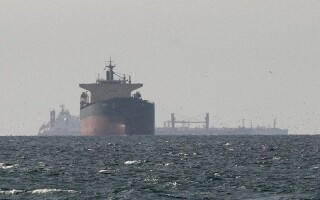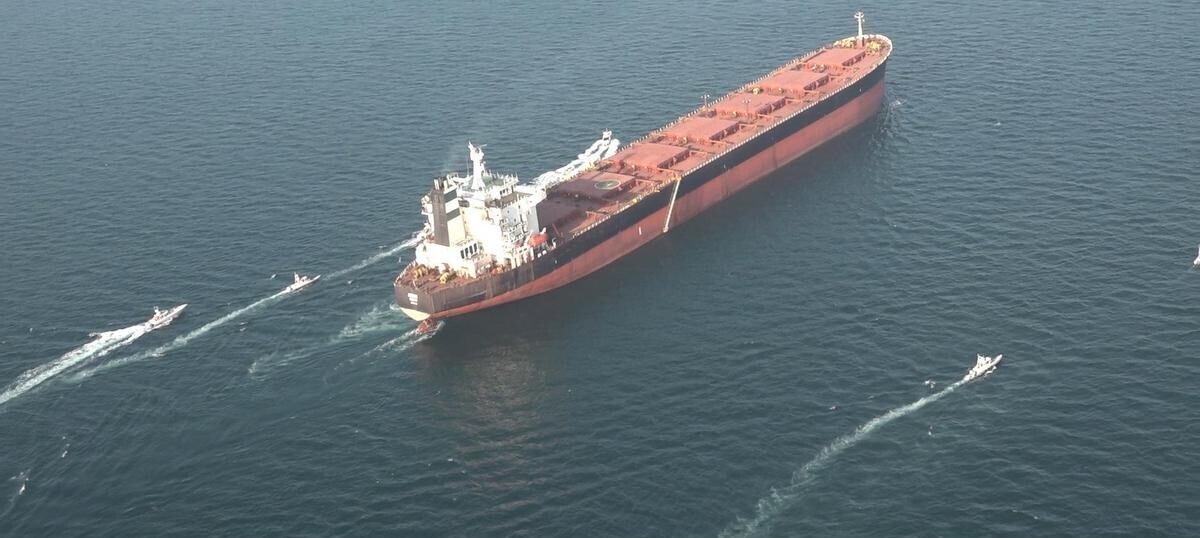
The US president justified the escalation with a direct accusation against the Persian regime: he stated that the talks in Islamabad failed because Tehran refuses to abandon its nuclear ambitions, the point Washington considers central for any lasting peace agreement. On the Iranian side, the reaction was as harsh as it was calculated. Reuters reported that the Revolutionary Guard communicated that any military vessel approaching the strait will be considered a violation of the fragile two-week ceasefire and will receive a 'severe and decisive' response. Tehran's signal was not just rhetorical: it sought to make it clear that the regime is not willing to cede coercive control over a route through which nearly 20% of the world's oil circulates. The Iranian response came just hours after Trump announced, via Truth Social, that the US Navy will begin blocking the passage of ships in the Strait of Hormuz, intercepting vessels that have paid tolls demanded by Iran, and will proceed with demining tasks in the area. This reaction reveals that the dispute no longer pits only Washington against the Persian regime, but is beginning to more strongly unsettle regional actors that depend on this route to sustain exports, supply, and stability. Behind the grand phrase about the 'deadly whirlwind' lies, in reality, a much deeper political definition. Iran wants to show that it retains asymmetric damage capability even after weeks of military and diplomatic pressure, while Trump seeks to exhibit that he will not allow the regime to use Hormuz as a tool of global blackmail. In a statement disseminated by state and semi-official Iranian media, the regime's naval leadership assured that it maintains 'total control' over the planet's most sensitive maritime passage and warned that any misstep by the United States could lead to a 'deadly whirlwind'. In parallel, regional media that echoed the official Iranian message translated this stance as a reaffirmation of 'total control' and a willingness to push the area toward a scenario of military attrition. The strait is today the most important lever Iran has to extort the world market, while the United States seeks to break that pressure tool without giving up the strategic objective of preventing the regime from advancing its nuclear program. There, the delegation led by JD Vance left without an agreement after almost 21 hours of talks, after insisting that Iran must stop enriching uranium and dismantle structures that Washington interprets as part of a military nuclear capability project. The problem for the international community is that the tension is no longer limited to verbal sparring. Although in the last few hours three supertankers managed to transit the Strait of Hormuz, the Gulf markets continued to operate with strong caution, and the fear of a new traffic disruption remains fully alive. The result is an increasingly unstable scenario, with broken diplomacy, threatened navigation, and a concrete possibility that any incident at sea could push the crisis toward a larger-scale direct clash. The core message is clear: the regime intends to preserve the ability to regulate, intimidate, and condition navigation in one of the world's biggest energy bottlenecks. The fight over Hormuz has ceased to be a side chapter of the crisis and has become its central nerve center. To this is added another relevant political signal: the CEO of ADNOC, the state oil company of the United Arab Emirates, came out to publicly emphasize that the strait 'never belonged' to Iran and cannot be closed or unilaterally restricted by Tehran. The breakdown of dialogue in Pakistan further deepened this clash. Tehran, April 12, 2026 - Total News Agency - TNA - The crisis in the Strait of Hormuz entered this Sunday into a phase of maximum tension after the Iranian Revolutionary Guard responded to the naval blockade ordered by Donald Trump with a message of open military threat. In Hormuz today, it is no longer just a question of who controls a maritime passage: it is a question of how far each is willing to go to impose its will.